A morning cup of chai, a favourite book or a quiet pause after work can feel more enjoyable when you have a comfortable place beside the window. Thoughtful window seating ideas can create that personal corner while adding useful storage and extra seating.
You do not need a large bay window or a spacious apartment. A regular window in a Mumbai or Thane home may offer an opportunity, provided the seating works with the room layout.
If you are planning your home with an interior designer in Thane, consider the window area alongside your sofa, bed, wardrobes and storage requirements.
Start With Your Window and Room Layout
Before choosing upholstery or cabinet finishes, decide how you will use the seat. Reading, accommodating visitors and storing extra bedding create different requirements.
Check the window sill, opening direction, handles and access for cleaning. Then consider how much floor space remains between the proposed bench and nearby furniture.
In a bedroom, wardrobe doors must open comfortably. In a living room, the seat should preserve the route to the balcony or adjoining room. A beautiful bench is only useful when it fits everyday movement.
Five Window Seat Design Ideas for Modern Homes
1. A Straight Bench Below a Regular Window
A straight bench is a practical starting point for apartments with conventional rectangular windows. It can sit neatly against the window wall, with a fitted cushion and a few loose back cushions.
Keep its length proportionate to the available wall. Extending it into a doorway or walkway to create a symmetrical appearance can make the room harder to use.
2. A Window Bench With Storage
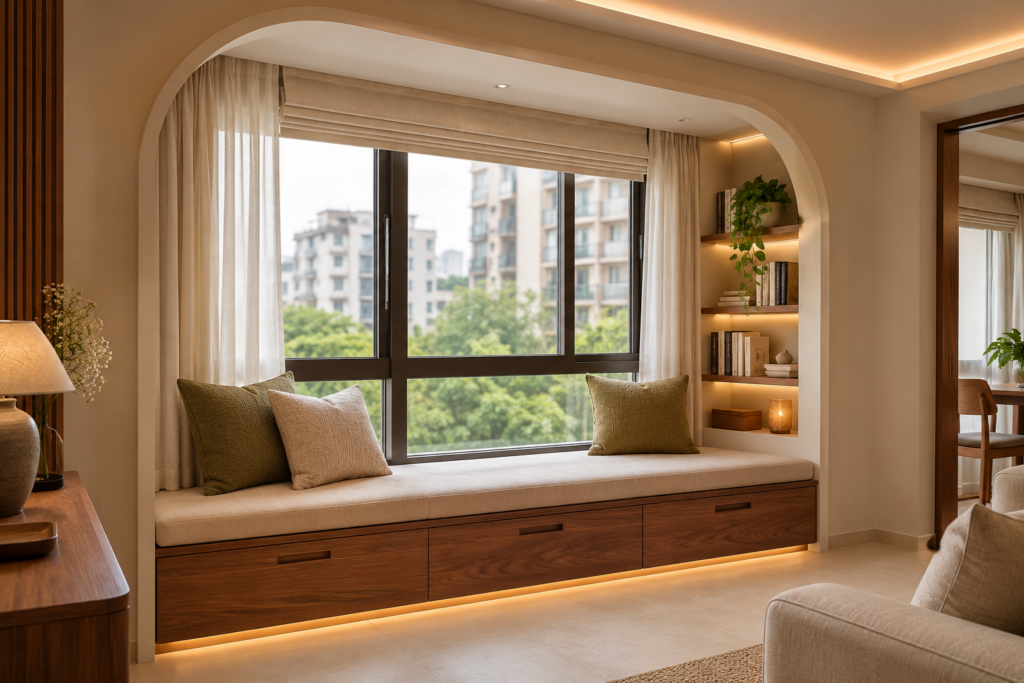
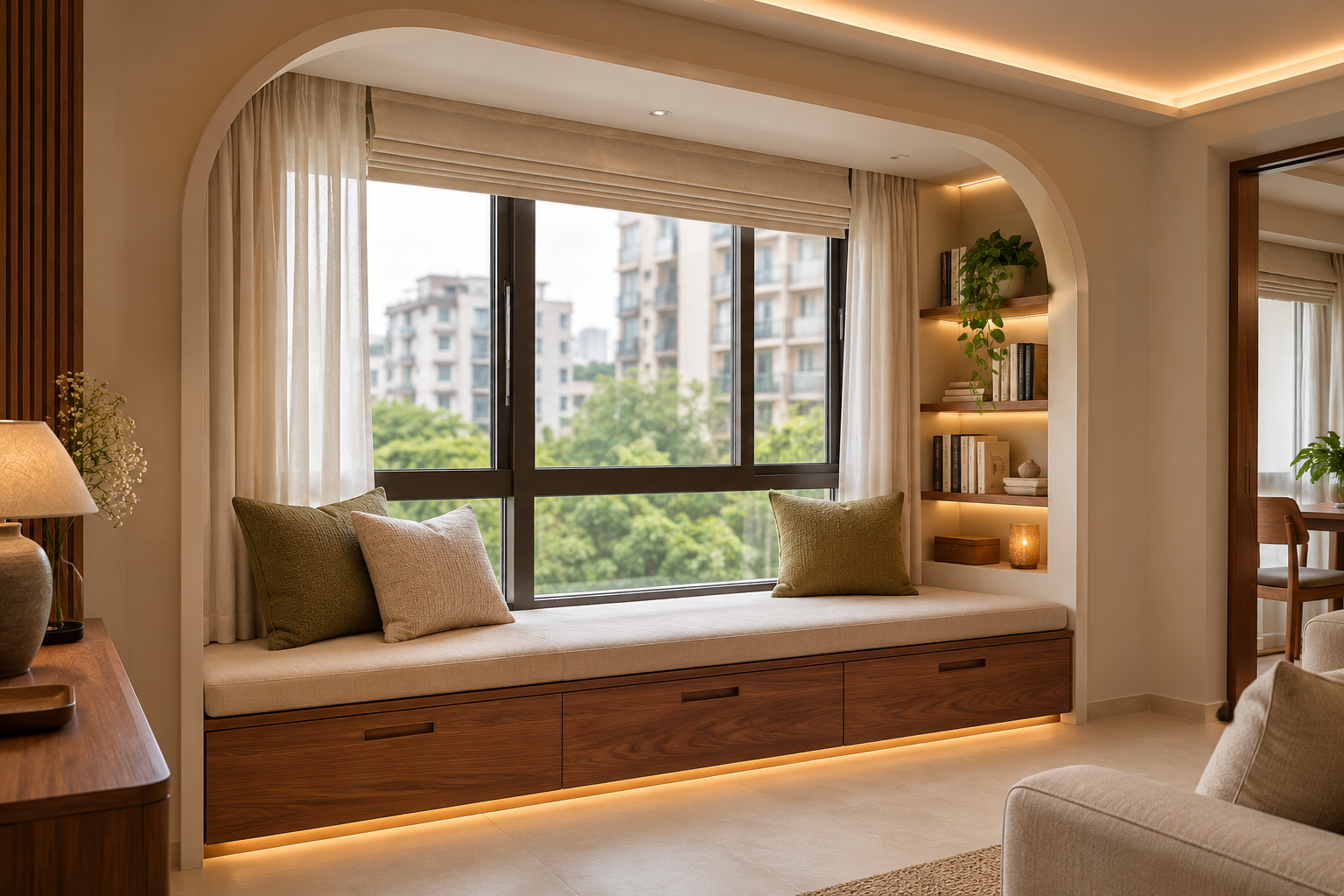
A window bench with storage combines seating with space for household belongings. The front can have drawers, cabinet shutters or open compartments, depending on access and what you plan to keep inside.
For a coordinated finish, choose a laminate or wood tone that relates to the existing furniture. Matching every surface is unnecessary; a consistent material palette is usually enough.
3. Bay Window Seating Design
Bay window seating design works with an existing projecting window recess. A customised bench can follow its shape, while cushions soften the corners and provide back support.
This option depends on the apartment’s architecture. For a flat window wall, a straight bench may achieve the comfort you want through a simpler furniture arrangement.
4. An L-Shaped Corner Seat
Where the layout allows, an L-shaped bench can turn a window-side corner into a shared sitting area.
Check both arms carefully: one might suit relaxed seating while the other provides occasional seating or storage. Keep the arrangement compact enough to preserve usable space in the centre of the room.
5. A Freestanding Upholstered Bench
A movable bench offers flexibility when you want a lighter intervention or expect to rearrange the room.
Choose a stable piece with a suitable seating height and back support for its intended use. Place it so that curtains, window handles and ventilation remain accessible.
Window Seating in the Living Room
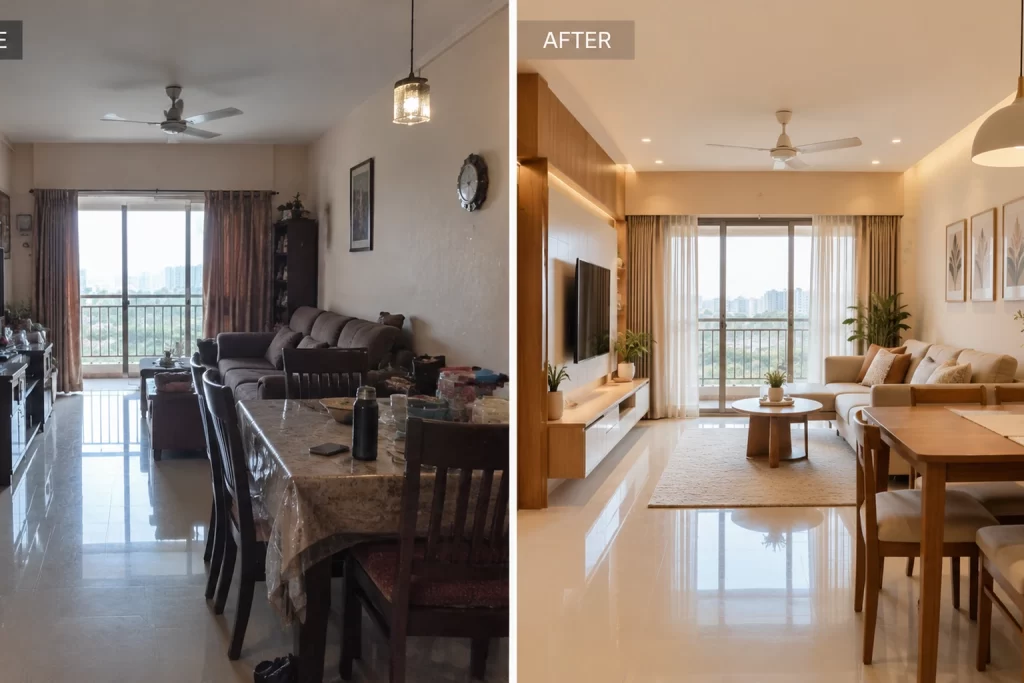
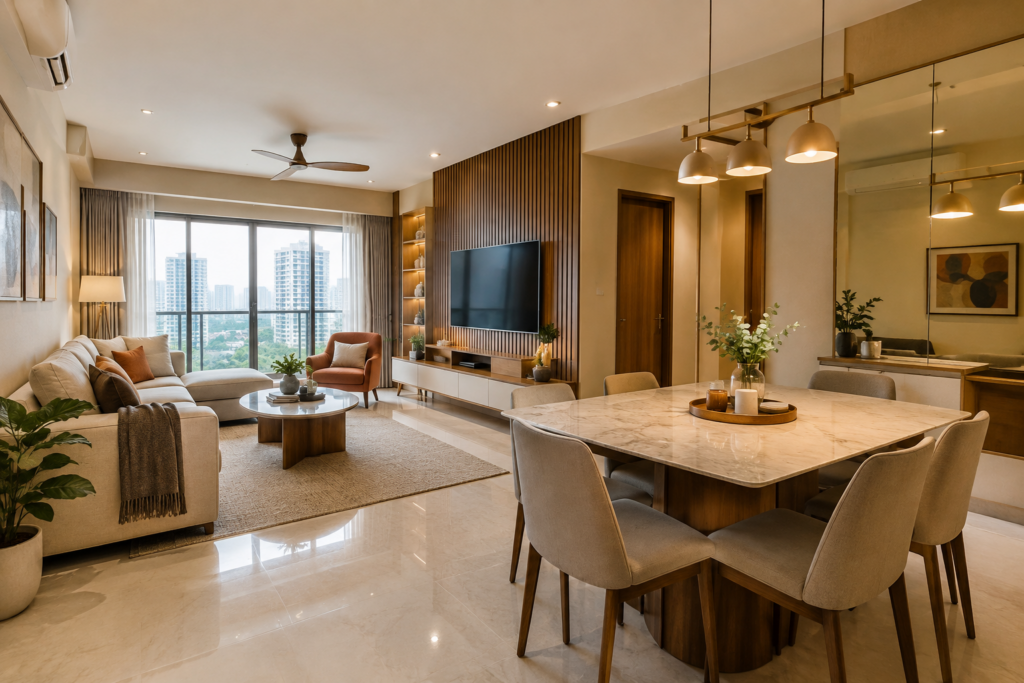
The most useful window seating ideas support the living room’s existing layout. A bench may provide occasional seating for visitors or replace a bulky chair where the proportions allow.
Consider how someone sitting there will interact with the sofa and other seats. A window bench tucked behind furniture may look attractive in a photograph but receive little use.
Carry through one or two colours from the sofa, rug or curtains. This helps the seating feel connected to the room while giving it its own character.
For compact living room interior design, check the complete furniture plan before adding another piece.
Window Seating in the Bedroom
A bedroom window seat can provide a place to read, put on shoes or unwind without using the bed for every activity.
Position it around the bed, wardrobe and dressing requirements. If the space is tight, a short seat with useful storage may work better than a wall-to-wall bench.
Soft upholstery and restrained colours can support a calm atmosphere. Keep enough space to change curtains, clean the glass and operate the window comfortably.
Choose Under-Seat Storage Around Daily Use
Storage should be convenient to open after the cushions and surrounding furniture are in place.
|
Storage option |
Useful for |
Planning consideration |
|
Pull-out drawers |
Games, accessories and frequently used items |
Leave enough space in front for opening |
|
Lift-up compartments |
Spare cushions and occasional-use bedding |
Consider the effort of moving cushions and lifting the lid |
|
Cabinet shutters |
Larger belongings or organised baskets |
Check the door swing and access |
|
Open cubbies |
A small collection of books or baskets |
Allow for dusting and easy cleaning |
Decide what belongs inside before dividing the cabinet. A few compartments sized around actual belongings may serve you better than many small sections.
Cushions, Upholstery and Materials: What Works Best?
The right combination depends on how often you use the seat, its exposure to sunlight and your maintenance preferences.
Choose a supportive seat cushion. Test the foam and finished height rather than selecting only by appearance. Back cushions should provide comfort without taking away too much sitting depth.
Make cleaning manageable. Removable, zipped covers can simplify care. Follow the fabric’s cleaning instructions; a removable cover is not automatically machine washable.
Consider the window exposure. Ask the upholstery supplier about colourfastness and suitability for direct sunlight. Coordinate blinds or curtains with the seat so they operate freely.
Specify the base properly. A plywood cabinet with laminate, a veneer finish or a solid-wood bench can each create a different appearance. Discuss material grade, edge finishing, supports and maintenance with your designer.
For Mumbai and Thane homes, check the window area for seepage before installing cabinetry. Moisture-resistant materials do not replace repairing a leaking window.
Create a Cosy Reading Corner
A modern window sitting area needs comfortable support, useful light and somewhere to keep a book or cup.
Start with the seat and back cushions. Add a small side ledge or table only if it leaves enough room to move.
For evening reading, plan a wall-mounted or adjustable light where it illuminates the page comfortably. Keep switches within easy reach and manage cables neatly.
A nearby shallow shelf can hold a few books. Leave enough clear seating space to stretch, change position and settle in.
Window Seating for Small Spaces: Keep Every Element Useful
In a compact 1 BHK or 2 BHK, the best arrangement often performs more than one job.
For example, a bedroom bench might provide reading space and storage for spare linen. In a living room, a window seat could accommodate visitors and hold board games.
Keep these priorities in mind:
- Measure the remaining walkway before finalising the bench depth.
- Choose cushions that leave usable sitting space.
- Keep access to window handles, grilles and curtains clear.
- Use storage that opens comfortably beside the existing furniture.
- Discuss the raised seating level and window protection where children use the room.
These choices make window seating part of practical home interior design in Thane, particularly where every furniture decision affects daily movement.
Plan a Window Corner That Works for Your Home
At MP Designs, residential design brings together furniture layouts, storage, materials, colours and lighting around how you use your home.
If window seating is part of your renovation or new apartment plans, explore our residential interior design services in Thane and residential interiors portfolio.
To begin the discussion, share photographs of the window wall, approximate room dimensions and whether you need reading space, additional seating or storage.
Contact MP Designs to discuss your home interior requirements.
Frequently Asked Questions
Yes, where the room layout allows it. A compact bench with useful storage can provide seating and organisation together. Check circulation, window access and nearby furniture before deciding its size.
No. A straight bench or suitable freestanding seat can work beside a regular window. Bay seating is one option for homes that already have a projecting window recess.
Choose upholstery according to comfort, sunlight exposure, cleaning needs and daily use. Ask for fabric samples and care instructions, and test the cushion before finalising it.
Size, construction material, storage mechanisms, upholstery, hardware and site preparation affect the quotation. A meaningful estimate needs measurements and a clear scope.
Yes. Window seating can be considered alongside furniture layouts, storage, lighting and finishes, helping it fit the room as a whole.